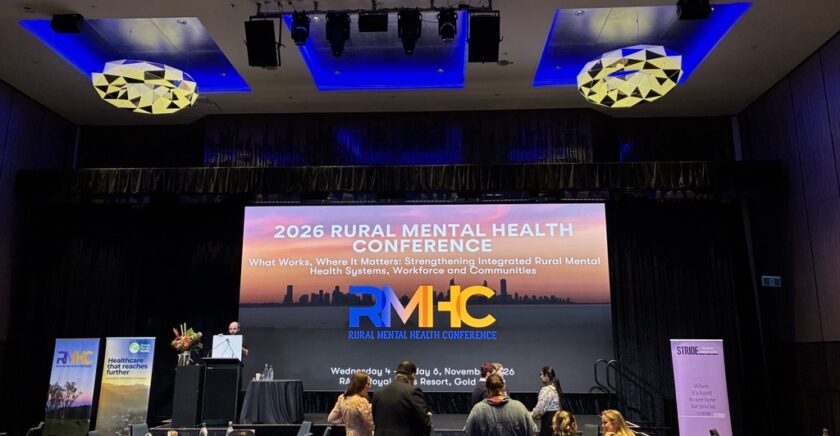
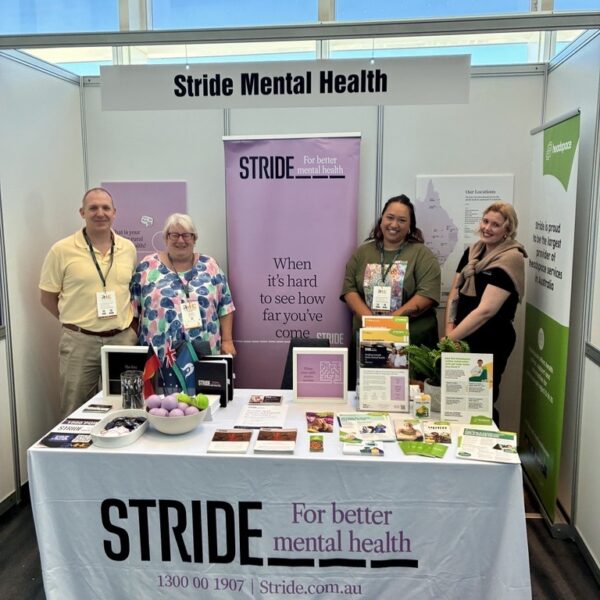
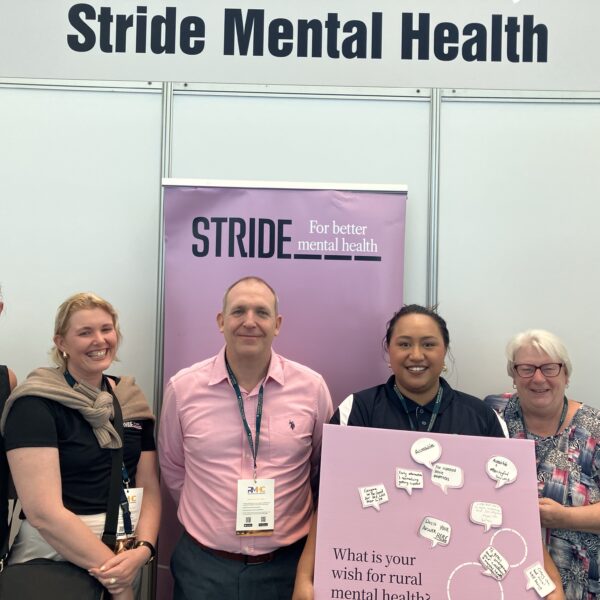
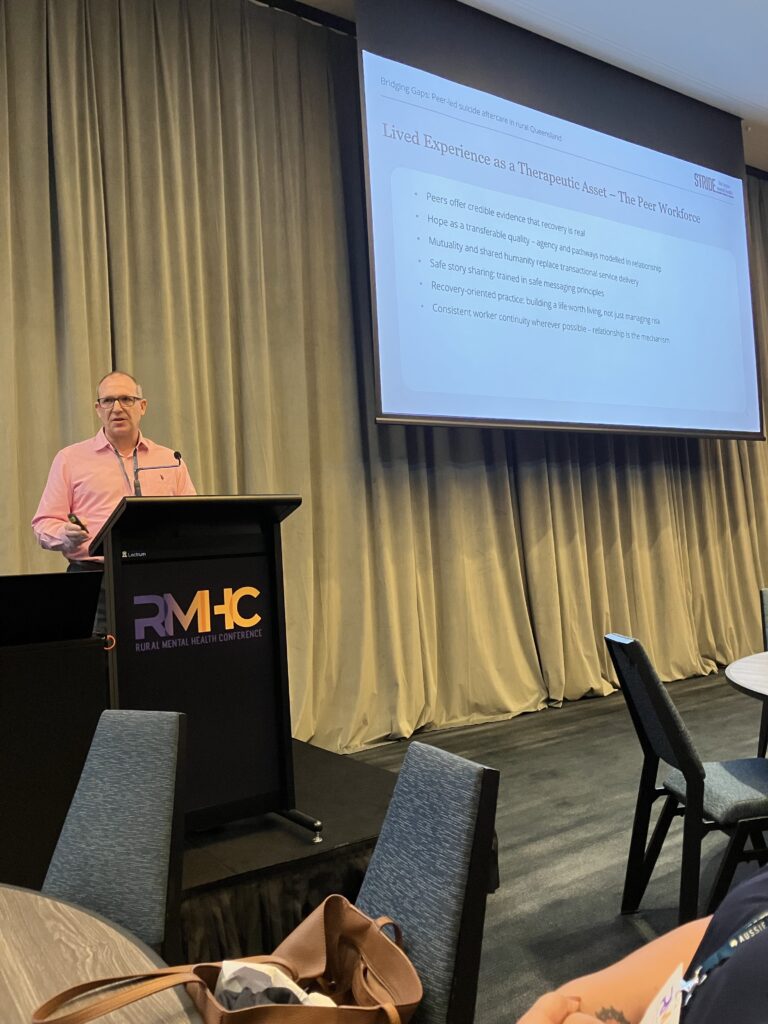
Dean’s presentation explored Stride’s Universal Aftercare Service (UAS) in South West Queensland, commissioned by Western Queensland PHN. The service provides peer-led, non-clinical psychosocial support to people following a suicidal crisis across the far southwest, Maranoa and Balonne regions.
At its heart is a simple idea: connection matters.
Through lived experience, peer workers offer understanding, hope and practical support, helping people reconnect with their communities and build pathways towards recovery.
The service aims to make that connection quickly, with every referral followed up within one business day. Early implementation insights show a 71% engagement rate from referral to ongoing support.
Dean also highlighted the importance of looking beyond clinical care. Practical challenges such as housing, finances and transport can be the starting point for building trust, while family, friends and informal community networks play an important role in ongoing support.
For rural communities, where distance, workforce challenges and stigma can create additional barriers to accessing support, services need to be shaped around the people and communities they serve.
As Dean’s presentation highlighted, suicide prevention is a collective effort. Sustained human connection, lived experience and strong community relationships all have a role to play.